
By the team at Truebuild Inspect, serving Ottawa and surrounding area
Published November 1, 2026 | 9 min read | Written for homeowners: most items are simple checks you can do over a weekends
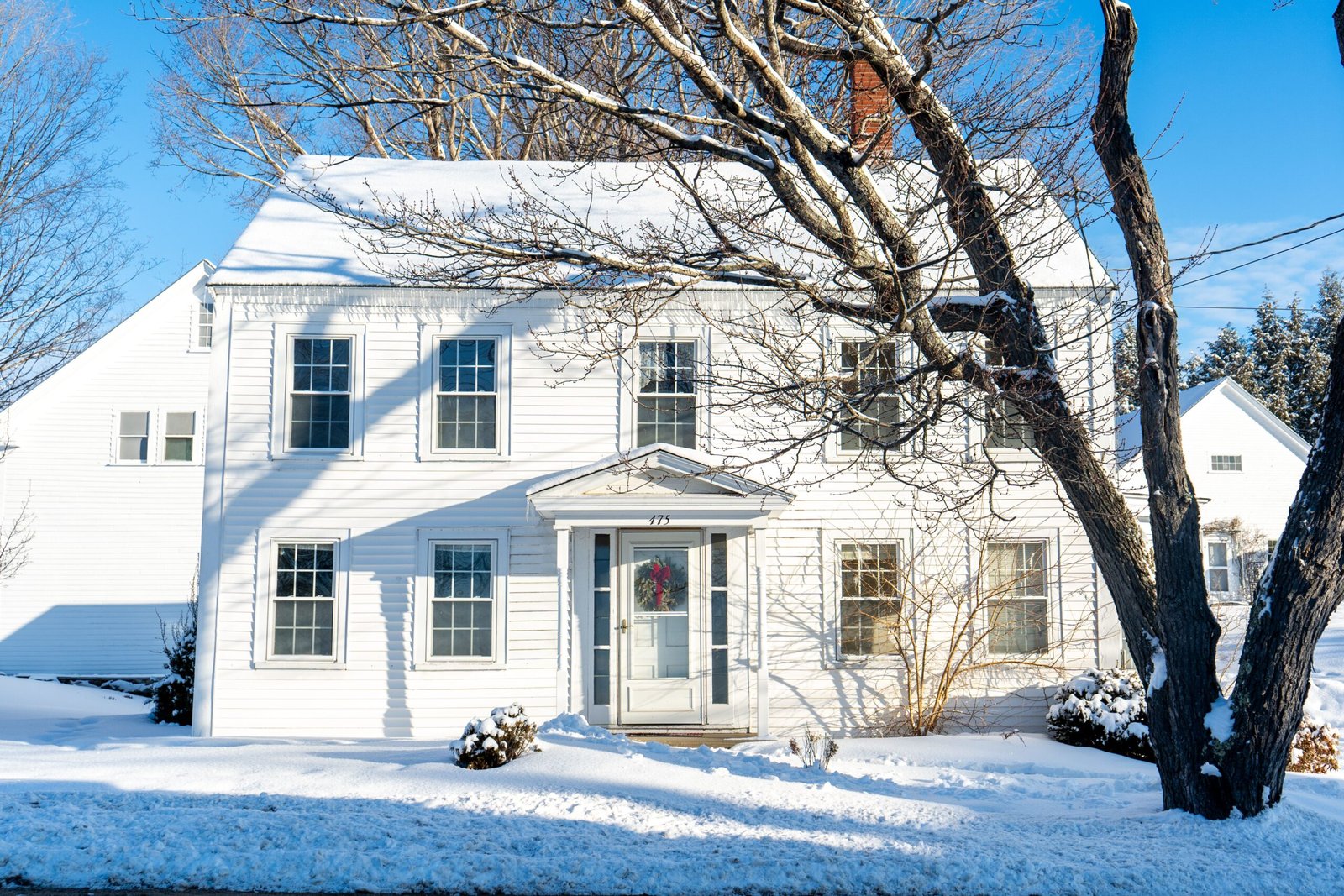
Ottawa winters are no joke. Between deep cold, heavy snowfall and repeated freeze-thaw cycles, winter puts more stress on a house than any other season. The good news: most winter damage is preventable, and the best time to prevent it is right now, before the first real snowfall.
As Certified Master Inspectors with civil engineering backgrounds, we see the same problems every year: ice dams, flooded basements, frozen pipes and furnaces that quit on the coldest night. This checklist walks you through what to check, why it matters and what to do about it.
Key Takeaways
- The biggest winter risks are ice dams, frozen pipes and wet basements, and all three are largely preventable.
- Early to mid-fall: clean gutters, check the roof and grading, seal drafts and book your furnace service.
- Before the first freeze: drain outdoor taps and test your sump pump.
- Before the first big snowfall: check attic insulation, test smoke and carbon monoxide alarms, prepare walkways and build an emergency kit.
Ready to book? Connect with the team today to schedule an inspection or learn more about home inspection services. Call 613-854-4044 or email info@truebuildinspect.ca
1. Clean Your Gutters and Downspouts
Clogged gutters are the starting point for many winter problems. Leaves and debris trap water, which freezes, adds weight and can pull gutters away from the fascia. Overflowing water can also freeze along the roofline and contribute to ice dams.
- Clear all debris once most of the leaves have fallen, but before the first snow. If trees near your home are still dropping leaves, plan a second cleaning.
- Flush the downspouts with a hose to confirm water flows freely.
- Check that gutters are firmly attached and sloped toward the downspouts.
2. Check Your Roof
Your roof carries the snow load all winter, so small defects become big leaks quickly.
- Look for missing, cracked, curled or lifted shingles.
- Check flashing around chimneys, vents and skylights.
- Look for sagging areas or daylight visible from the attic.
Climbing on a roof in fall is risky. A drone roof inspection lets us examine the whole roof surface, including steep or hard-to-reach areas, without anyone climbing a ladder and without foot traffic damaging your shingles.
3. Get Your Grading and Drainage Right
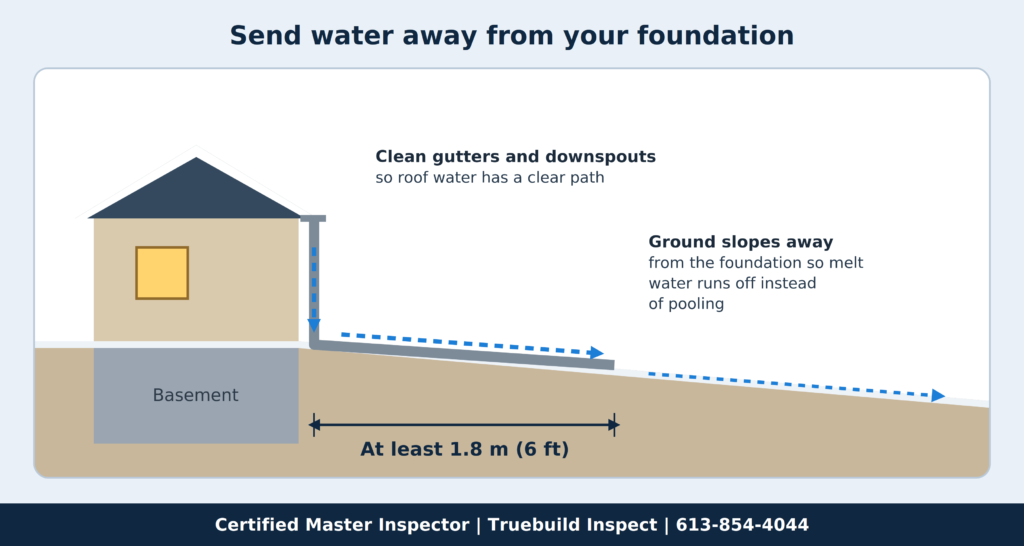
Water that pools against your foundation in fall will freeze and thaw all winter, and that cycle can widen cracks and push moisture into your basement.
- The ground around the house should slope away from the foundation.
- Extend downspouts so they discharge at least 1.8 m (6 ft) away from the house.
- Fill low spots next to the foundation and remove built-up soil or mulch that sits too close to siding.
4. Test Your Sump Pump
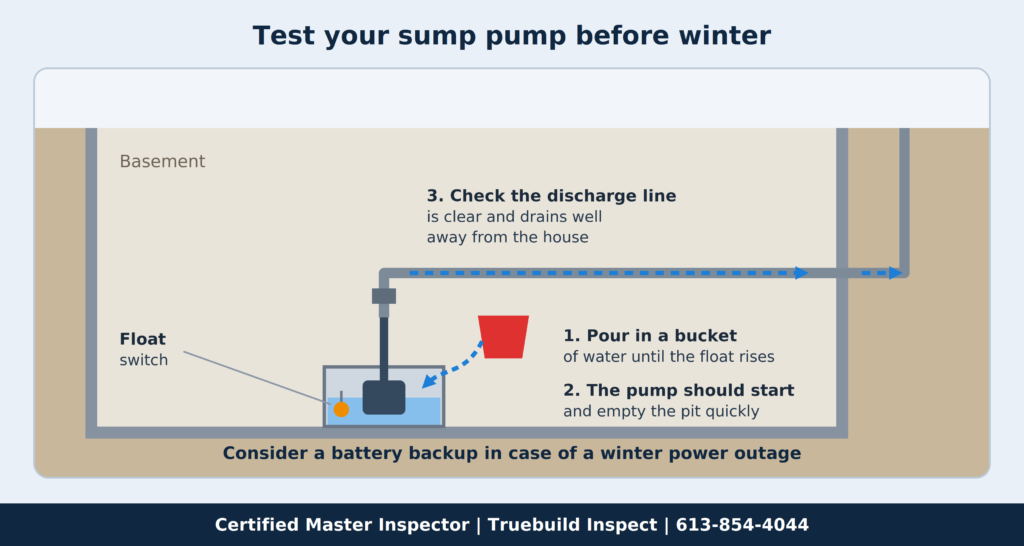
Spring melt is when sump pumps work hardest, but a pump that has seized over the summer will fail you when you need it.
- Pour a bucket of water into the pit and confirm the pump kicks on and drains.
- Check that the discharge line is clear and drains well away from the house.
- Consider a battery backup if your basement has flooded before or if power outages are a concern.
5. Shut Off and Drain Outdoor Water Lines
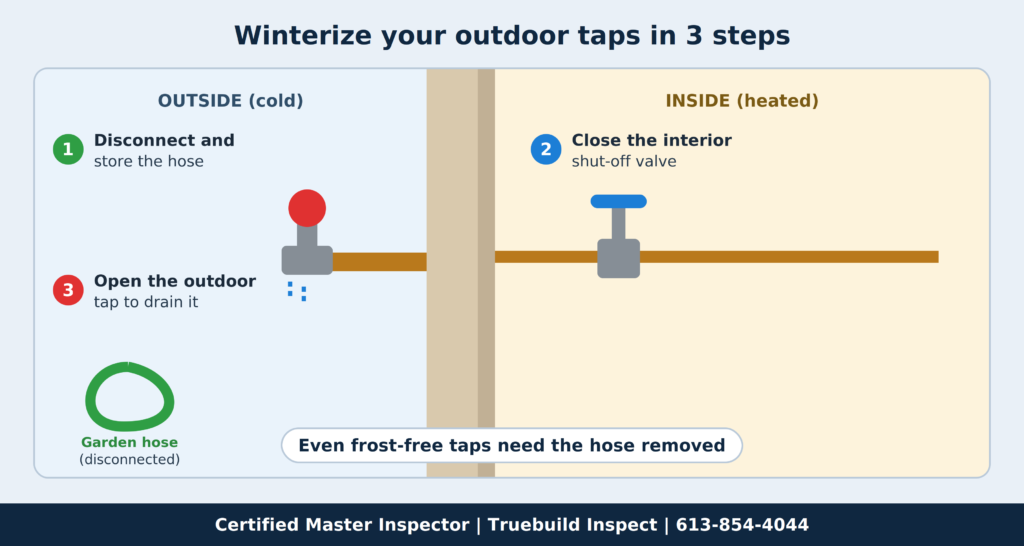
A frozen hose bib can split the pipe behind the wall, and you may not discover it until the thaw.
- Disconnect and store garden hoses.
- Shut off the interior valve to each outdoor tap and open the exterior tap to drain it.
- Drain and winterize irrigation systems.
- If you have frost-free taps, you still need to remove the hose.
6. Service Your Furnace or Heating System
Your heating system will run almost non-stop from December to March.
- Book a professional tune-up before the cold arrives, when HVAC companies are less busy.
- Replace the furnace filter, and check it monthly during the heating season.
- Keep vents and registers clear of furniture and rugs.
- Have your chimney or flue inspected and cleaned if you use a fireplace or wood stove.
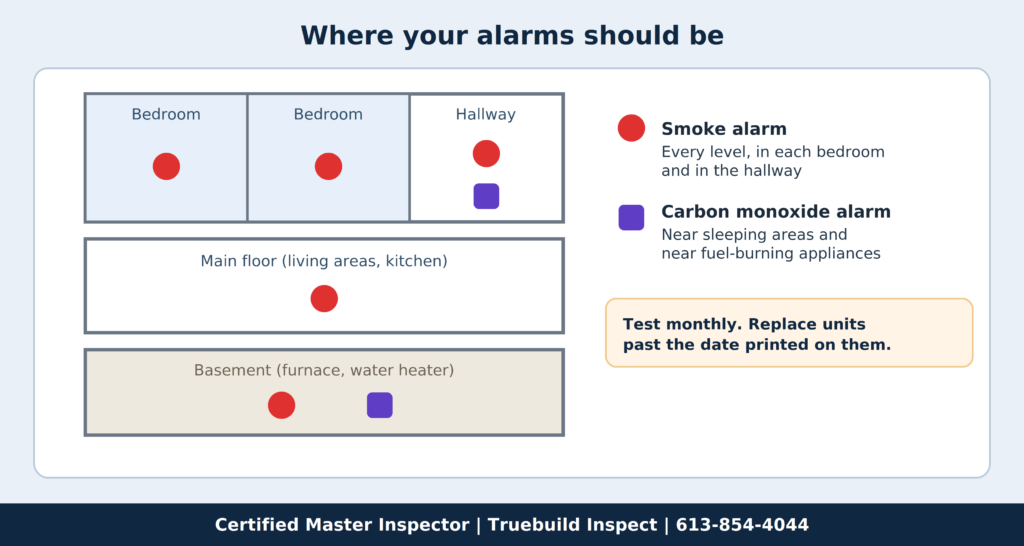
7. Test Smoke and Carbon Monoxide Alarms
Homes are sealed up tight in winter and heating equipment runs constantly, so this is the most important safety check on the list.
- Test every alarm and replace batteries where needed.
- Replace any alarms that are past their expiry date, which is printed on the unit.
- Make sure there is a carbon monoxide alarm near sleeping areas and on each level as required.
8. Seal Air Leaks Around Windows and Doors
Drafts waste energy and make rooms uncomfortable.
- Replace worn weatherstripping on exterior doors.
- Re-caulk gaps around window frames, both inside and outside.
- Check door thresholds and sweeps for gaps.
- Seal around penetrations such as pipes, vents and cables.
A simple test: on a windy day, hold a lit stick of incense near the edges of windows and doors and watch for smoke movement.
9. Check Your Attic Insulation and Ventilation
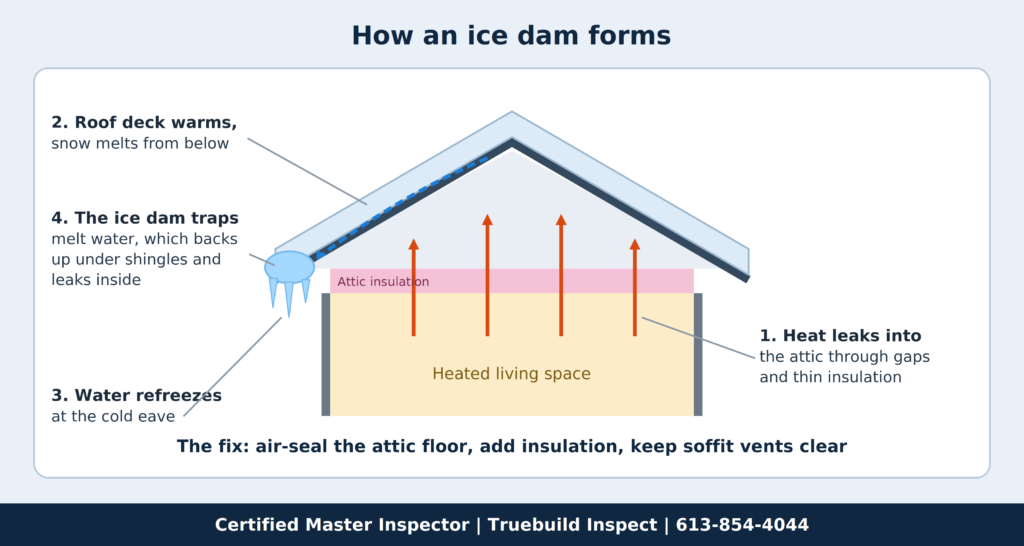
This is one of the biggest factors in preventing ice dams. Heat escaping into the attic warms the roof deck, melts the snow from underneath, and the meltwater refreezes at the cold eaves.
- Check that insulation is even and deep enough, with no compressed or missing areas.
- Make sure soffit vents are not blocked by insulation.
- Look for stains, damp insulation, frost on the underside of the roof deck or signs of pests.
- Seal gaps around attic hatches, pot lights and wiring penetrations.
10. Inspect Your Foundation and Basement
Small issues are easier and cheaper to fix before winter makes them worse.
- Look for new or growing cracks in foundation walls and floors.
- Check for efflorescence (white powdery deposits), dampness or musty smells.
- Make sure window wells are clear and covered if needed.
- Keep stored items off the floor in case of leaks.
If a crack has grown, is wider than a pencil line, or shows water staining, have it assessed before the freeze-thaw cycles begin.
11. Protect Your Pipes
Frozen pipes are one of the most expensive winter problems, and they often happen in unheated or poorly insulated areas.
- Insulate exposed pipes in crawl spaces, garages and exterior walls.
- Know where your main water shut-off is and make sure everyone in the household can find it.
- During extreme cold, open cabinet doors under sinks on exterior walls and let a faucet drip.
- If you are away over winter, keep the heat on at a safe minimum.
12. Manage Indoor Humidity
Cold outdoor air is dry, but too much indoor moisture creates condensation on windows, mould risk and damage in attics and wall cavities.
- Use a hygrometer to monitor humidity.
- Run bathroom and kitchen exhaust fans, and make sure they vent outdoors.
- Clean your dryer vent and check the exterior flap to reduce fire risk and moisture.
- If you use a humidifier, portable or furnace-mounted, service it before the heating season: replace the filter or water panel, clean the tank and check the humidistat setting.
- Aim for a comfortable range, and lower the level during very cold weather if you see window condensation.
13. Service Your Water Heater
- Check for rust, corrosion or moisture around the base of the tank.
- Drain a few litres to flush sediment, if recommended by the manufacturer.
- Know the age of your tank. Units that are over 10 years old are worth watching.
14. Prepare Driveways, Walkways and Exterior Features
- Repair cracks in asphalt, concrete and interlock before water gets in and freezes.
- Fix loose handrails and uneven steps, which become hazards when icy.
- Stock up on salt or ice melter and a good shovel.
- Trim tree branches that hang over the roof or power lines, since heavy snow and ice can bring them down.
- Store patio furniture, and protect outdoor air conditioning units if the manufacturer recommends it.
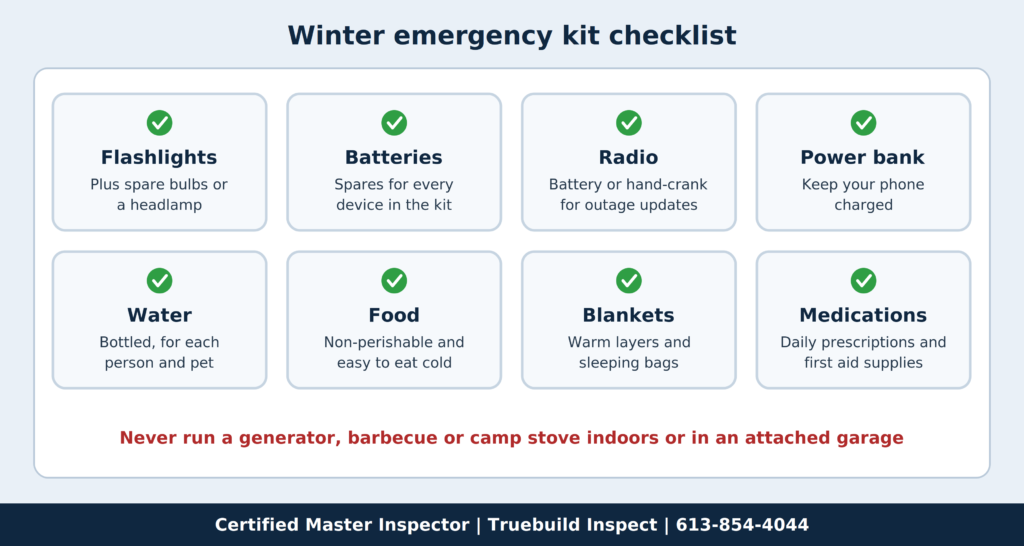
15. Build a Winter Emergency Kit
Ottawa has seen major ice storms and extended power outages, so it pays to be ready.
- Flashlights, batteries, a battery-powered radio and a power bank.
- Bottled water, non-perishable food and any medications.
- Warm blankets and a safe backup heat plan.
- Never run a generator, barbecue or camp stove indoors or in an attached garage.
A Quick Fall-to-Winter Timeline
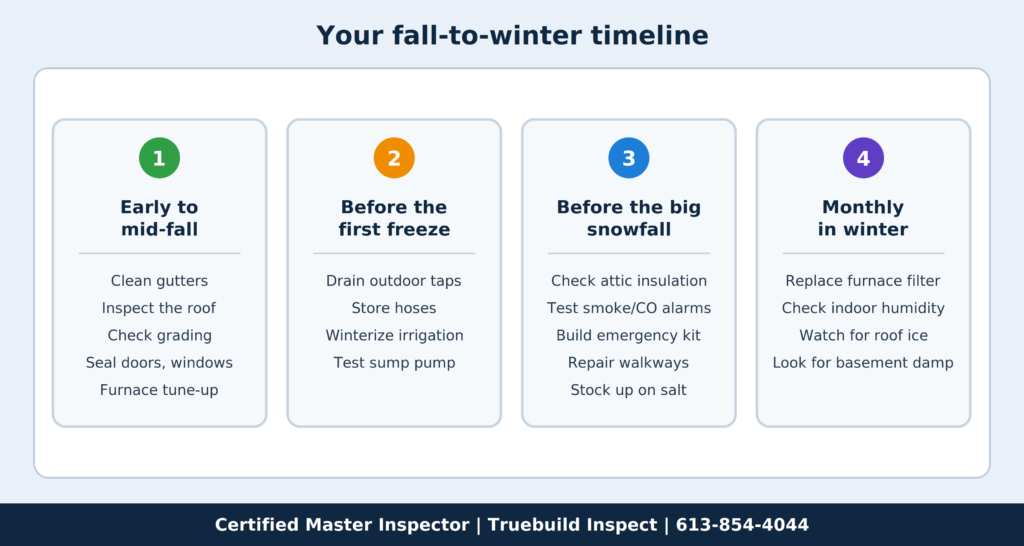
- Early to mid-fall: gutters, roof, grading, windows and doors, furnace service.
- Before the first freeze: outdoor taps, hoses, irrigation, sump pump test.
- Before the first big snowfall: attic check, alarms, emergency kit, walkways.
- Monthly through winter: furnace filter, humidity, ice buildup on the roof edge, basement dampness.
When to Call a Professional
A checklist handles the basics, but some things are best left to a trained eye: roof condition, foundation cracks, attic moisture and signs of hidden water damage. A professional inspection can catch small problems early, when repairs are inexpensive, and give you a clear picture of your home’s condition going into winter.
Truebuild Inspect offers home inspection services, including pre-purchase, pre-sell and Tarion warranty inspections for new homes, plus sewer scope inspections and drone roof inspections across Ottawa and the surrounding area.
Connect with the team today to schedule an inspection or learn more about services.
- Phone: 613-854-4044
- Email: info@truebuildinspect.ca
- Website: truebuildinspect.ca
This article offers general guidance for homeowners and is not a substitute for a professional inspection of your specific property, so book an inspection for advice specific to your home.